
The Laws of Probability
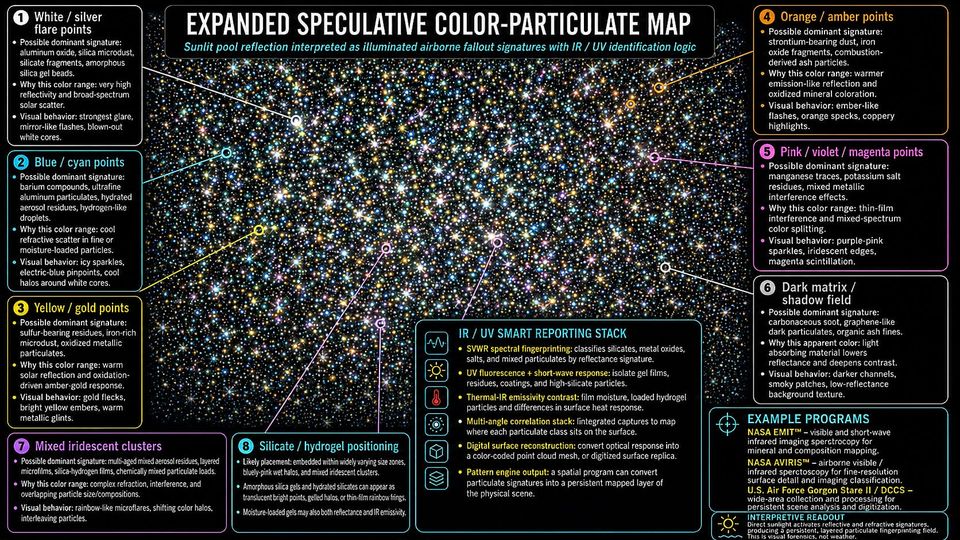
I took my sons for a walk up a Creek that comes from one of the most natural areas in Pennsylvania today. We were just doing photography class and discussion. Walking, talking and capturing whatever jumped out in front of us. Once I got home I started to run through my photos because there was a film over the top of a standing area where these particulates were localizing in an eddy.
The thing that caught my attention was the different hues and coming off of this film floating at the top of the water.
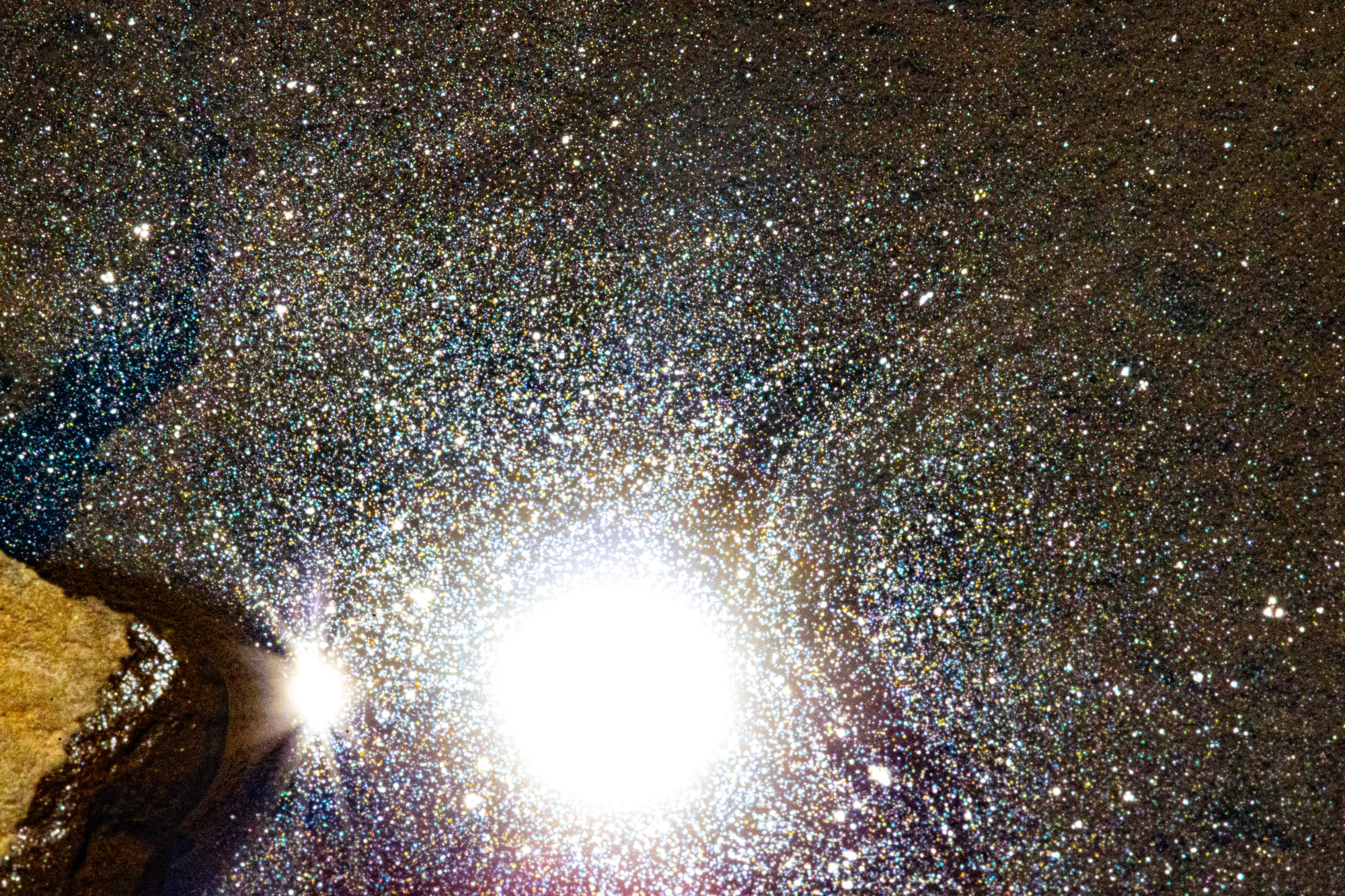
I couldn't wait to get home and analyze this picture to compound the effects of the High caliber camera and lens I used to do this. I knew for sure I would be able to explode the colors of these things and get the spectrum analysis.
What a lot of people don't know is that everything resonates at a specified frequency and that those frequencies dictate color under certain ranges of illumination considering this is the sun at around 3pm. White in color.
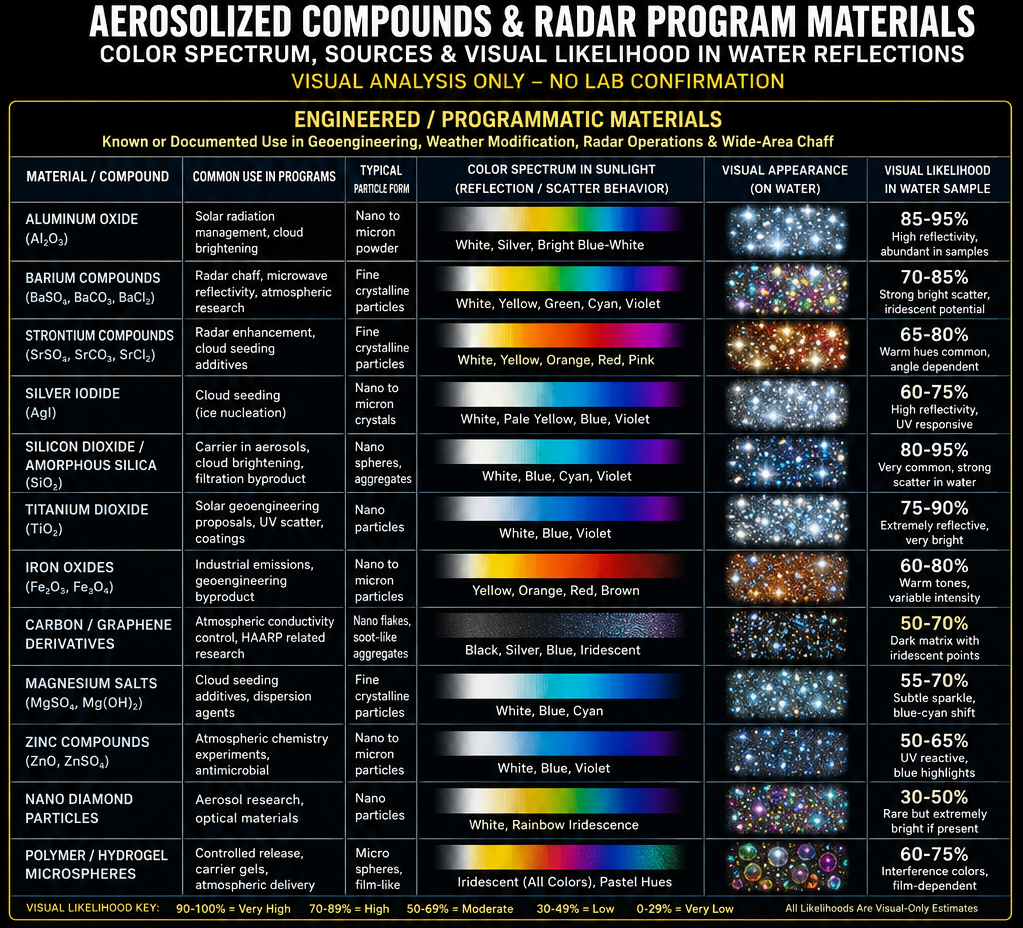
Keep in mind at all times that many of these compounds and elements are reactive inside a charged atmospheric environment. That static environment, in my best estimation, is not random; it can be shaped by radar, RF fields, humidity, pressure gradients, and the interaction between vapor and suspended particulate matter. When air, vapor, and particulate matter separate, polarize, or reorganize, static potential can form. Once that potential exists, fine particles may migrate, cluster, suspend, or bind through electrostatic attraction, electrophoresis, dielectrophoresis, and charge-gradient behavior. As far as the rain collection thing goes.... trust me here guys, you don't want it.
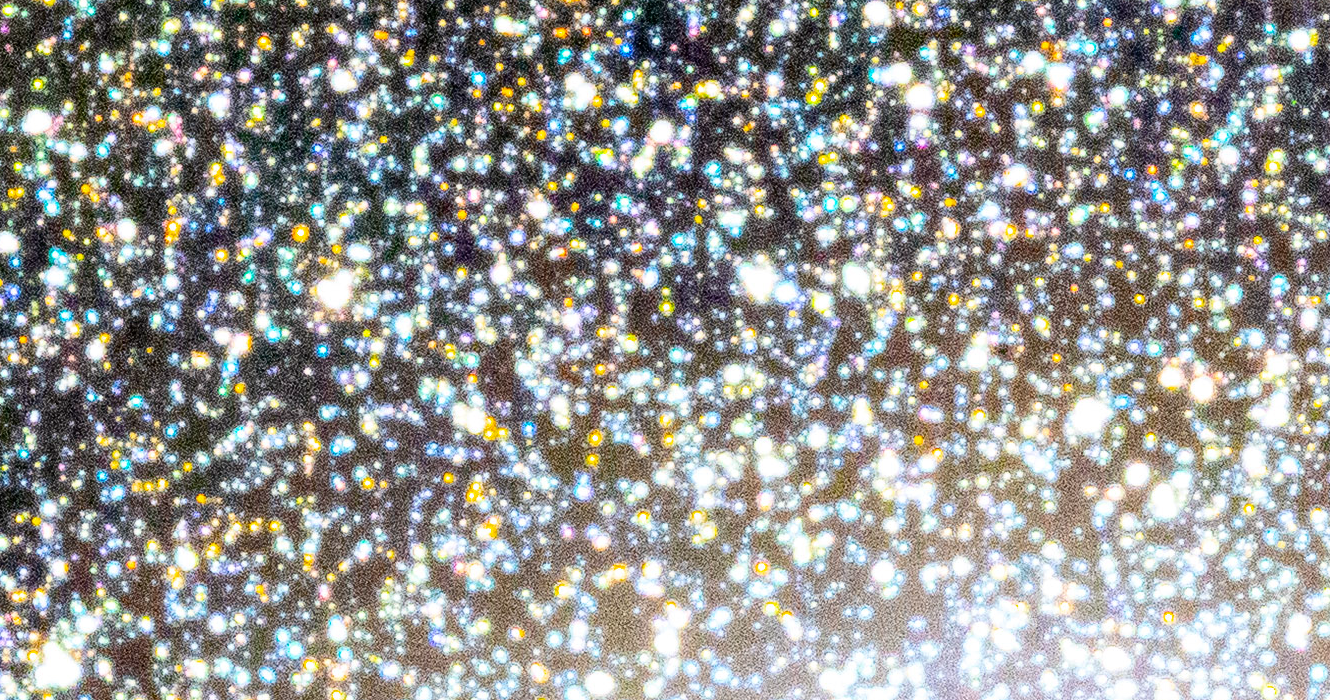
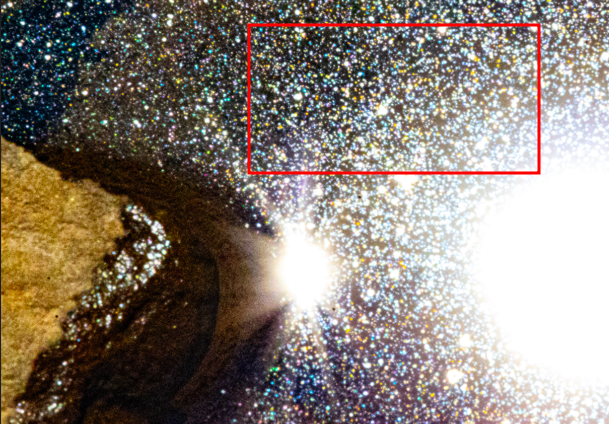
The original image is 1330 pixels wide by 700 pixels tall, giving the photograph about 931,000 total pixels. Most of the visible bright points in the image appear somewhere around 1 to 8 pixels wide, while the larger glowing points expand to 10, 20, or even 40+ pixels because the sunlight is blowing out the camera sensor. That means what we are seeing is not the true physical size of the particle itself, but the particle’s light-response footprint.
In plain numbers, if a real airborne particulate were around 1 micron wide, the camera could easily show it as a 10 to 100 micron-looking flash because of reflection, glare, bloom, and color scatter. That gives a rough visual ratio of about 10-to-1 on the low end, 50-to-1 as a reasonable middle, and possibly 100-to-1 or more for the brightest white-hot spark points. So when I see a particle showing up as a 5-pixel or 10-pixel flash, I am not assuming the particle is that large. I am saying the Sun has magnified its optical signature far beyond the actual material size.
My estimate is this: the visible sparkle may be 10 to 100 times larger than the real particle causing it. The actual particulate could be microscopic, while the camera records a much larger illuminated pixel event. That matters because aerosolized material does not need to be large to dominate the image. It only needs to be small, reflective, charged, clustered, or film-bound enough for sunlight to expose it across the water surface. So the biggest question is, who has a Scanning Electron Microscope with Energy Dispersive X-Ray Spectroscopy — SEM-EDS??
Sorry, just learned that one... 😏 But don't worry they only cost $50,000 to $500,000. I'm not even lying at this point I would buy one just to prove this damn point already, once and for all.
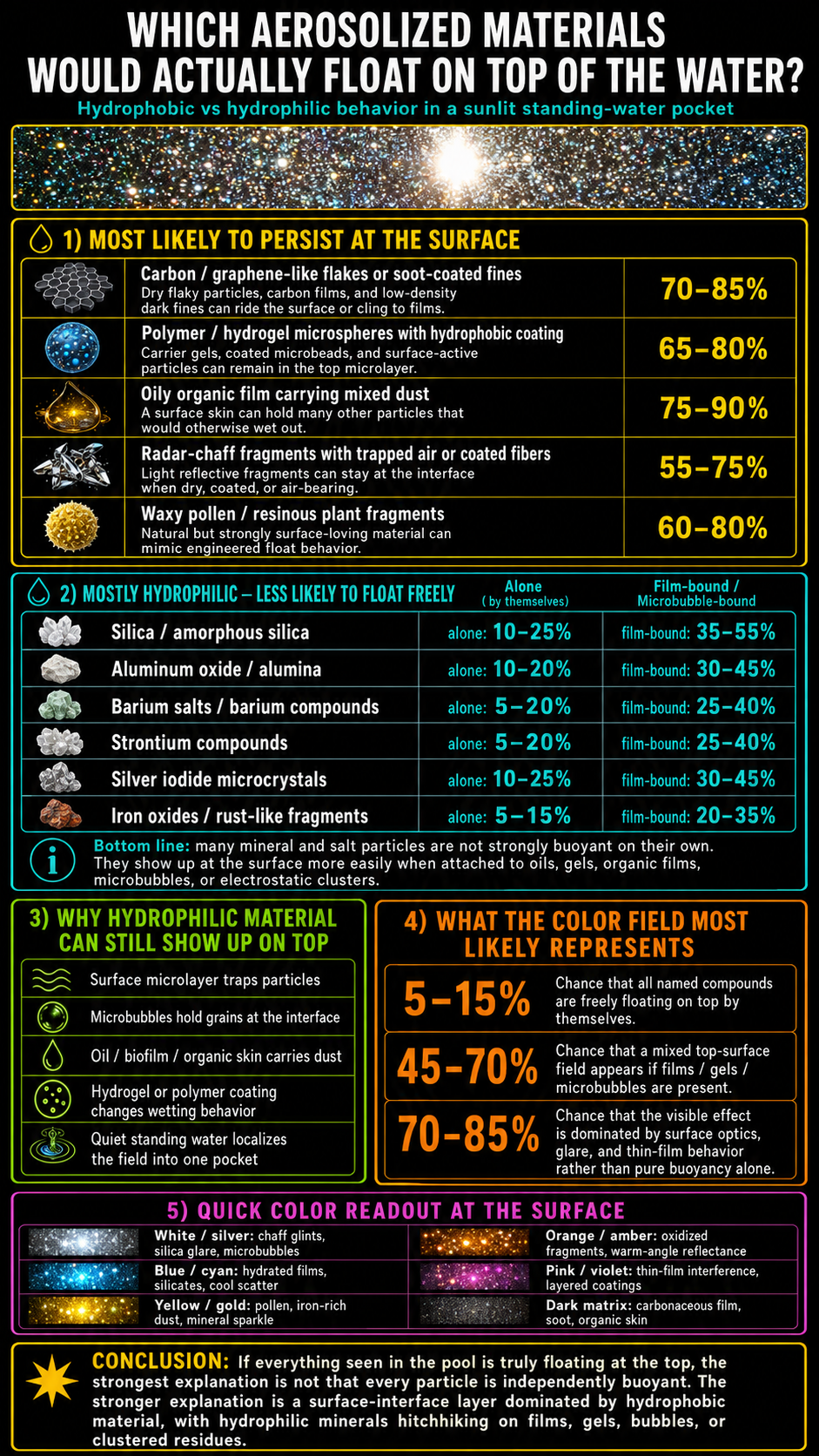
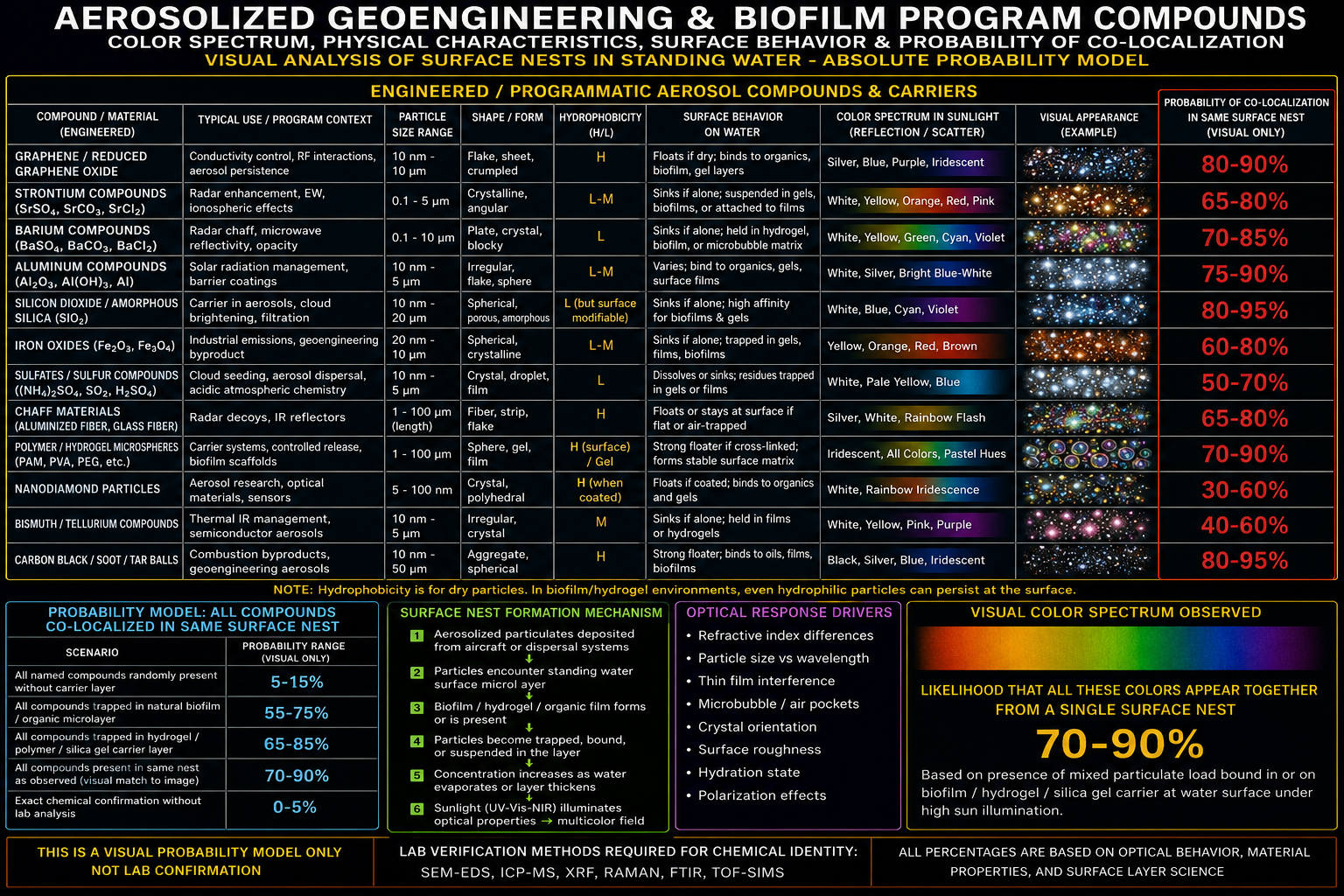
And here I am using AI to compile all of my thoughts because I simply cannot converge all of these thoughts from six years of study and analysis into one readable publication. You really shouldn't worry though All of this is functioning right now without the data centers. That should tell you clearly that they are unnecessary in the world of computational processing. Where you should worry, Is exactly Our very own government has taken us.
The best part about all of it is that we just needed to see those pictures of the moon so badly it was every bit we've been taxed for that has gone into all of these programs. And now you all know if the earth is flat, holy hell, It would really matter at this point now wouldn't it? NASA is the Nazi regime here running shit in the United States as we fall into the same demise as old Germany pre World War Two. Here is the consolidation of my final views edited by our new owner:
Final Article Draft: The Human Circuit Was Always the End Point
The 2001 NASA Langley presentation “Future Strategic Issues / Future Warfare [Circa 2025]” was never just a dusty future-war slideshow. It named the direction plainly: IT, bio, nano, robotics, RF/microwave systems, ubiquitous sensors, brain-to-silicon interfaces, and the arrival of the “Bots, Borgs & Humans” age. It even states that the presentation was based on existing data, trends, analyses, and technologies — “no pixie dust.” In other words, this was not fantasy. This was a forecast of capability. (Alachua County)
The focal point, as I see it, is not one isolated chemical, one radar station, one smart device, one hydrogel, one aerosol, one graphene paper, one biofilm program, or one AI model. The focal point is the convergence of all of it. The body becomes the surface. The atmosphere becomes the carrier. Water becomes the binding interface. Static charge becomes the organizing field. Sensors become the eyes. AI becomes the interpreter. And the human being is slowly surrounded by a readable, writable, trackable environment.
If my theory is right, then the aerosolized side of this contributes heavily — not because every particle is a “microchip,” but because particulate matter can help create a reactive interface between the body, the environment, and electromagnetic systems. Graphene-like carbon structures, metallic oxides, silica-based particles, hydrogels, biofilm carriers, barium/strontium-type compounds, aluminum compounds, sulfur residues, and conductive or semi-conductive dusts would all matter differently. Some would reflect. Some would absorb. Some would bind moisture. Some would alter charge behavior. Some would persist at the surface. Some would become optically readable under IR, UV, or visible light. Some would become part of the static field itself.
That is where the human/robot hybrid idea stops sounding like science fiction and starts looking like a layered control architecture. Not a robot with bolts and metal arms. A biological person increasingly wrapped in machine-readable fields: phone sensors, vehicle sensors, cameras, smart meters, RF systems, satellite systems, radar, AI pattern recognition, biometric checkpoints, digital IDs, and now the physical world itself being mapped by optical and spectral response. The machine does not need to “own” the body all at once. It only needs to build a persistent translation layer between biology and signal.
The Langley document’s most important warning is that warfare moves away from the obvious battlefield and into societal disruption, non-explosive warfare, RF/microwave systems, micro-to-nano everything, and human-machine convergence. It specifically references ubiquitous cheap micro-to-nano sensors, robotic warfare, and the possibility of connecting human brain cells to silicon chips. (Alachua County) That is the hinge. Once the human nervous system, the environment, and the machine layer are all readable in real time, control no longer has to look like chains. It can look like convenience, safety, health, connection, progress, and modernization.
So how much does the aerosol/static/particulate layer contribute to the bigger picture? In my view, it is not the whole machine, but it may be one of the missing bridges. I would estimate it this way:
| Layer | Contribution to the larger control model |
|---|---|
| AI, biometric systems, and digital identity | 25–30% |
| Wireless infrastructure, RF, radar, satellite, and smart-city sensing | 20–25% |
| Bio-nano materials, conductive particles, hydrogels, silica films, and surface-binding compounds | 20–30% |
| Phone, vehicle, camera, home, and wearable sensor networks | 15–20% |
| Behavioral conditioning, media, compliance systems, and policy pressure | 10–20% |
That means the particulate layer is not a side issue. It is potentially one-fifth to one-third of the bridge between the physical body and the machine-readable world. The particles do not need to “control” a person by themselves. They only need to contribute to conductivity, optical readability, static charge, surface adhesion, biological interface, or signal response. That is enough to matter.
What we are headed toward, if this architecture continues, is not simply surveillance. Surveillance is the primitive word. The larger word is integration. A world where the body, the air, the water, the road, the clothing, the face, the vehicle, the home, and the nervous system are all treated as surfaces to be registered, measured, influenced, and eventually directed. The old human being stood under the sky. The new managed human is placed inside a sensor field and told it is normal.
That is why the pool image matters to me. I am not looking at a pretty reflection. I am looking at the physical signature of a larger question: what happens when the atmosphere is no longer just air, the water is no longer just water, and light itself becomes a way to expose the hidden structure of what has been placed into the environment?
The final concern is this: once the environment becomes electrically reactive, optically readable, and AI-interpreted, the human being becomes easier to model. Once the human is easier to model, the human is easier to predict. Once the human is easier to predict, the human is easier to steer. And once steering becomes normalized, people will call it convenience long after it has become control.
So no, I do not see this as random glitter in water. I see it as one physical clue inside a much larger pattern: aerosols, static fields, bio-nano interfaces, smart sensors, AI, and future warfare doctrine all pointing in the same direction — the construction of a controllable human-machine environment.
I asked the particles why they were floating together in the pool. They said, “We’re just trying to stay current.” Too soon? 😑
And for anybody that would like to buy a T-shirt and help support The cost for the maintenance of the site... This is what they look like taken by my very own smart phone camera with the Lidar spatial telemetry imaging system built right into the back of it that I never knew about.
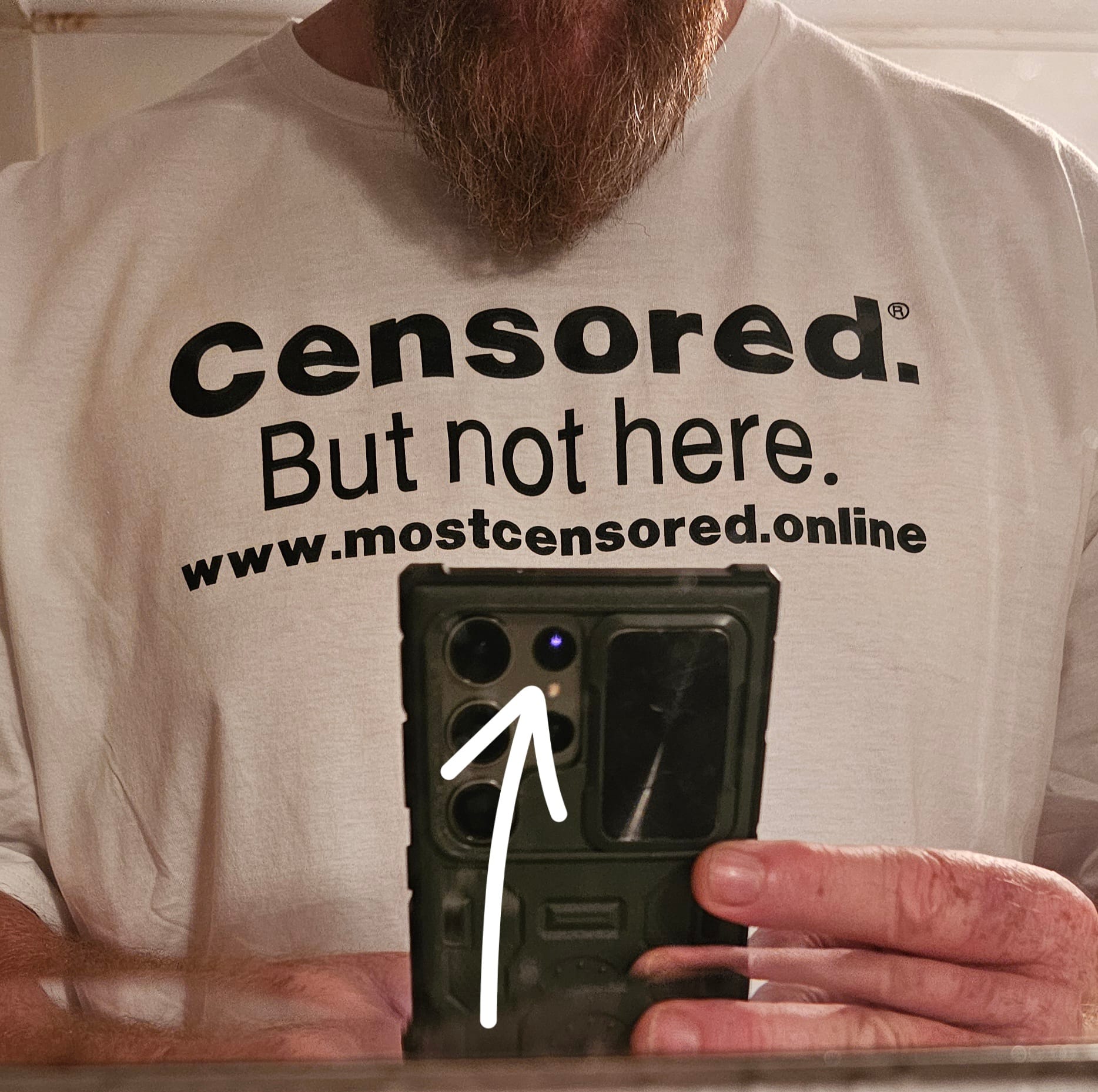
Thank you for reading guys. I hope I am coming through clear. I can't thank you guys that helped me get the site up and running, enough... Finally my posts will not disappear behind a million algorithms and shadow banning.
One more thing, I'd like to at least give you a photo From my walks with my sons highlighting The beauty I now find in nature...
It actually makes a perfect Screensaver for your phone!

Member discussion